What Is Barrier Packaging?
Barrier packaging refers to packaging materials engineered to control the transmission of gases, moisture, aroma, and light. Unlike standard packaging, barrier packaging uses multi-layer laminated structures to achieve specific protective performance.
The main purpose of barrier packaging is to:
- Prevent moisture penetration
- Reduce oxygen exposure
- Block UV and light damage
- Preserve product freshness
- Extend shelf life
- Maintain product safety
Barrier packaging is especially important for products that are sensitive to environmental conditions, such as dry foods, coffee, pharmaceuticals, and industrial powders.
How Barrier Packaging Works
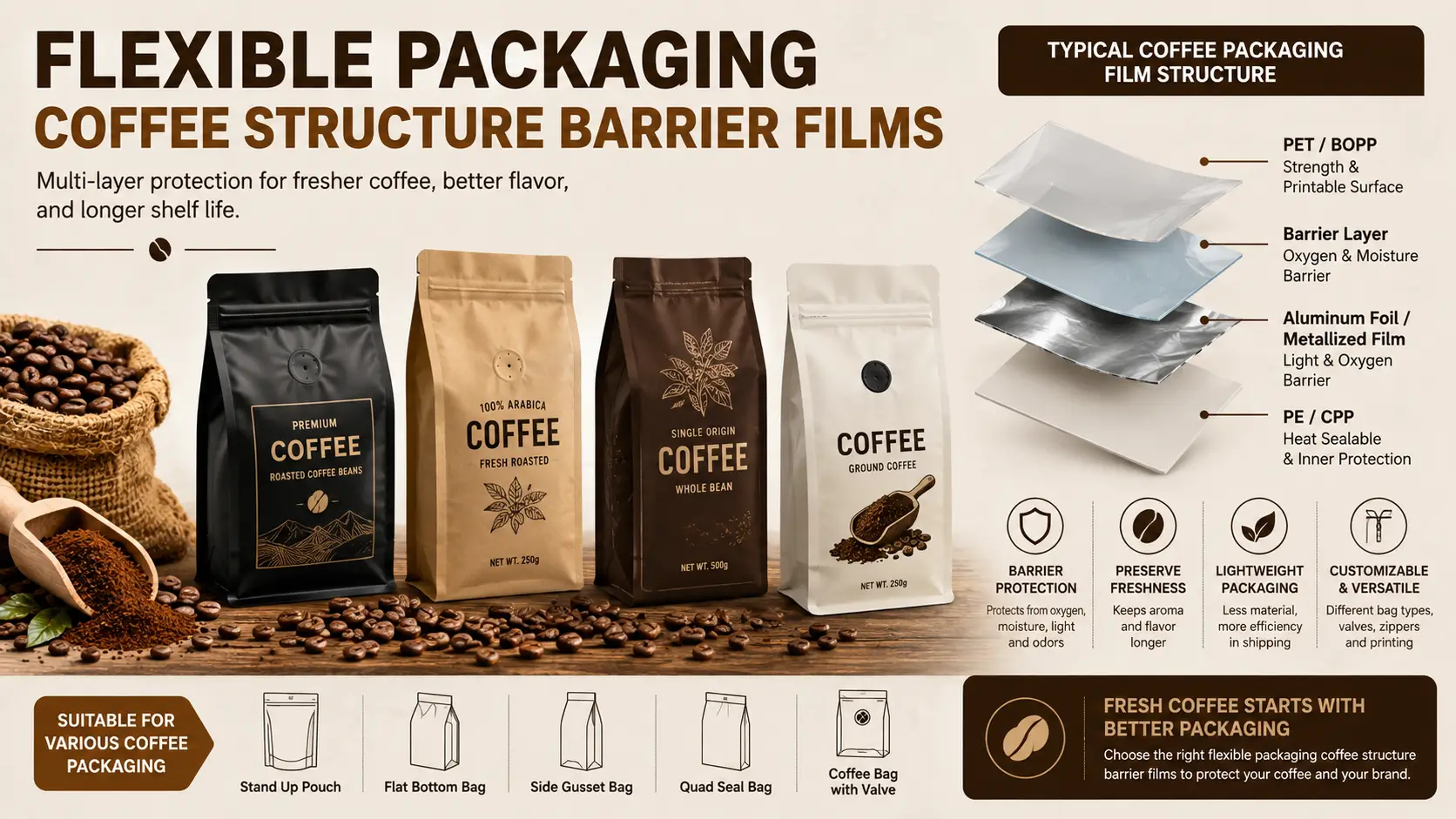
Barrier packaging works through layered material technology, where different materials are laminated together to create a protective structure.
Each layer provides a specific function:
- Outer Layer: Mechanical strength and printability
- Barrier Layer: Oxygen and moisture protection
- Seal Layer: Heat sealing and product containment
Typical barrier performance is measured by:
- OTR (Oxygen Transmission Rate) – Resistance to oxygen penetration
- MVTR (Moisture Vapor Transmission Rate) – Resistance to moisture
- Light Transmission – Protection against UV exposure
The lower the OTR and MVTR values, the stronger the barrier performance.
Common Barrier Packaging Materials
High-performance barrier packaging relies on specialized materials. The most widely used materials include:
Aluminum Foil Barrier Packaging
Aluminum foil provides one of the highest levels of barrier protection available.
Key characteristics:
- Near-zero oxygen transmission
- Excellent moisture resistance
- Complete light protection
- Long-term shelf-life support
Typical applications:
- Coffee packaging
- Freeze-dried foods
- Pharmaceuticals
- Nutritional powders
- High-value products
Aluminum foil laminated pouches are widely used when maximum protection is required.
EVOH Barrier Films (Ethylene Vinyl Alcohol)
EVOH is a high-performance plastic barrier material known for its excellent oxygen resistance.
Key benefits:
- Outstanding oxygen barrier properties
- Transparent structure
- Flexible film performance
- Suitable for multilayer laminates
Typical applications:
- Food packaging
- Ready meals
- Medical packaging
- Vacuum packaging
EVOH is commonly used in multi-layer co-extruded films.
Nylon (PA) Barrier Films
Nylon films provide strong mechanical strength and moderate barrier properties.
Key features:
- High puncture resistance
- Good oxygen resistance
- Excellent durability
- Suitable for vacuum packaging
Typical applications:
- Meat packaging
- Frozen foods
- Industrial packaging
Nylon is often combined with PE or EVOH layers.
Metallized Films (VMPET / VMCPP)
Metallized films provide barrier protection through vacuum metal coating.
Key advantages:
- Good moisture resistance
- Improved oxygen barrier
- Cost-effective alternative to foil
- Lightweight structure
Typical applications:
- Snack packaging
- Dry food packaging
- Powder packaging
These materials offer a balance between performance and cost.
Types of Barrier Packaging Structures
Barrier packaging is typically created using laminated or co-extruded structures.
Common structures include:
- PET / AL / PE – High barrier foil structure
- PET / VMPET / PE – Metallized barrier structure
- PA / EVOH / PE – Co-extruded high barrier film
- PET / PE – Medium barrier packaging
Each structure is selected based on product sensitivity and storage requirements.
Key Benefits of Barrier Packaging
Barrier packaging provides multiple advantages for manufacturers and brand owners.
1. Extended Shelf Life
High barrier materials significantly reduce oxygen and moisture exposure, helping extend product shelf life and reduce spoilage.
This is especially critical for:
- Coffee
- Snacks
- Freeze-dried foods
- Medical products
2. Product Stability and Safety
Barrier packaging protects products from environmental damage, ensuring:
- Stable product composition
- Reduced contamination risk
- Improved product safety
This is essential for regulated industries such as pharmaceuticals and chemicals.
3. Protection During Transportation
Products transported across long distances are exposed to varying humidity and temperatures.
Barrier packaging helps prevent:
- Moisture absorption
- Product degradation
- Packaging failure
This reduces loss and improves delivery reliability.
4. Cost Efficiency in the Long Term
Although high-barrier materials may have higher initial costs, they reduce:
- Product waste
- Return rates
- Storage losses
This improves overall operational efficiency.
Applications of Barrier Packaging
Barrier packaging is widely used across industries that require strict product protection.
Food Packaging
Barrier packaging is essential for:
- Coffee
- Tea
- Snack foods
- Powder products
- Pet food
These products require protection from oxygen and moisture to maintain flavor and shelf life.
Pharmaceutical Packaging
Pharmaceutical products require strict environmental control.
Barrier packaging protects:
- Medicines
- Supplements
- Medical powders
This ensures product safety and compliance with regulations.
Industrial and Chemical Packaging
Barrier packaging is commonly used for:
- Industrial powders
- Specialty chemicals
- Sensitive materials
These materials require controlled moisture and oxygen exposure.
Electronics Packaging
Electronic components are sensitive to moisture and oxidation.
Barrier packaging helps prevent:
- Corrosion
- Static damage
- Humidity damage
This ensures long-term storage safety.
How to Choose the Right Barrier Packaging
Selecting the right barrier packaging depends on several technical factors.
1. Product Sensitivity Level
Determine how sensitive the product is to:
- Oxygen
- Moisture
- Light
Highly sensitive products require foil-based structures.
2. Shelf Life Requirement
Longer shelf life requires higher barrier performance.
Example:
- Short shelf life → Metallized films
- Long shelf life → Aluminum foil laminates
3. Storage Conditions
Products stored in humid or variable climates require stronger moisture barriers.
4. Packaging Format
Barrier materials can be used in multiple formats:
- Stand-up pouches
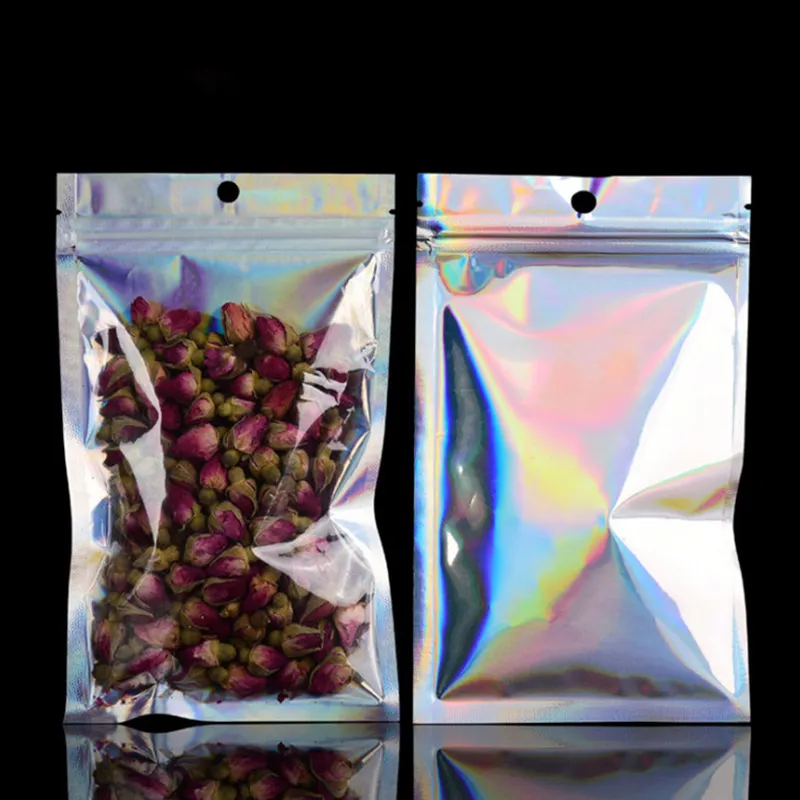
- Flat barrier bags
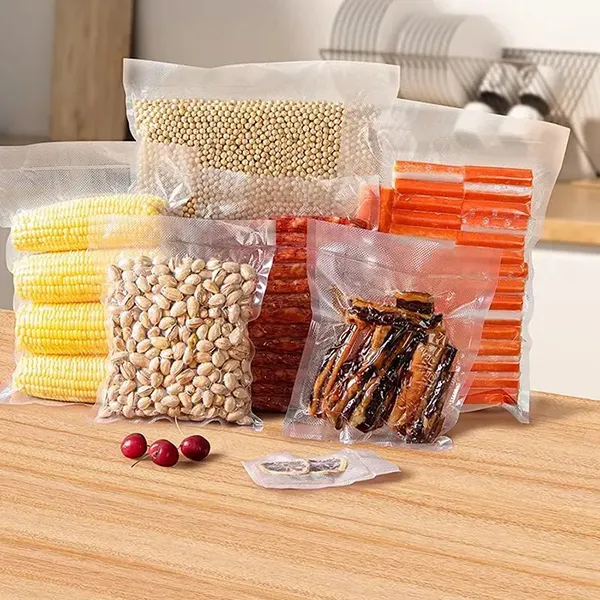
- Vacuum bags
- Retort pouches
Each format serves different packaging needs.
Future Trends in Barrier Packaging
Barrier packaging continues to evolve with new technologies.
Emerging trends include:
- Ultra-high barrier films
- Lightweight multilayer structures
- Recyclable barrier materials
- Smart barrier coatings
- Sustainable high-performance laminates
Companies adopting advanced barrier solutions gain competitive advantages in product protection and market reliability.
Conclusion
Barrier packaging is a critical solution for industries requiring high-level protection against moisture, oxygen, and environmental exposure. By selecting the right materials and structures, businesses can improve product stability, extend shelf life, and ensure safe transportation.
Understanding barrier packaging technology allows manufacturers to choose the most effective protective packaging solution based on product sensitivity, storage conditions, and performance requirements.