What Are Heat Sealed Bags?
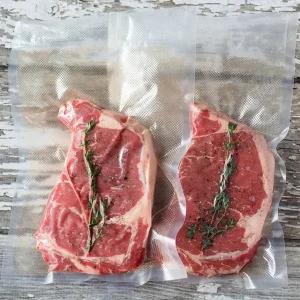
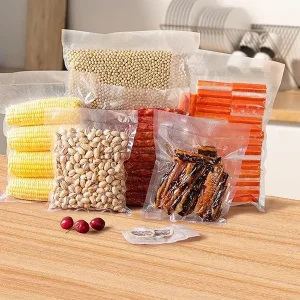
Heat sealed bags are packaging bags that are closed using heat and pressure to create a strong, airtight seal. Unlike adhesive or zip-style closures, heat sealing melts the inner layer of the packaging material, bonding the layers together to form a secure seal.
This method creates packaging that is:
- Airtight
- Leak-proof
- Tamper-resistant
- Moisture-resistant
Heat sealed bags are commonly used when product protection and shelf life are critical, especially in food powder packaging, snacks, medical supplies, and industrial materials.
How Do Heat Sealed Bags Work?
Heat sealing works by applying controlled heat and pressure to thermoplastic materials.
The process includes:
- Heating the sealing area
The inner sealing layer softens when exposed to heat. - Applying pressure
Pressure forces the softened layers together. - Cooling the seal
The material solidifies, creating a strong bond.
The result is a permanent, durable seal that prevents air, moisture, and contaminants from entering the package.
This sealing method is widely used in automated packaging lines due to its speed and reliability.
Common Materials Used in Heat Sealed Bags
Different materials provide different performance levels depending on the application.
Polyethylene (PE)
Polyethylene is one of the most common heat sealing materials.
Key features:
- Good flexibility
- Reliable sealing performance
- Cost-effective
- Moisture resistance
Common uses:
- Food packaging
- Retail packaging
- Protective packaging
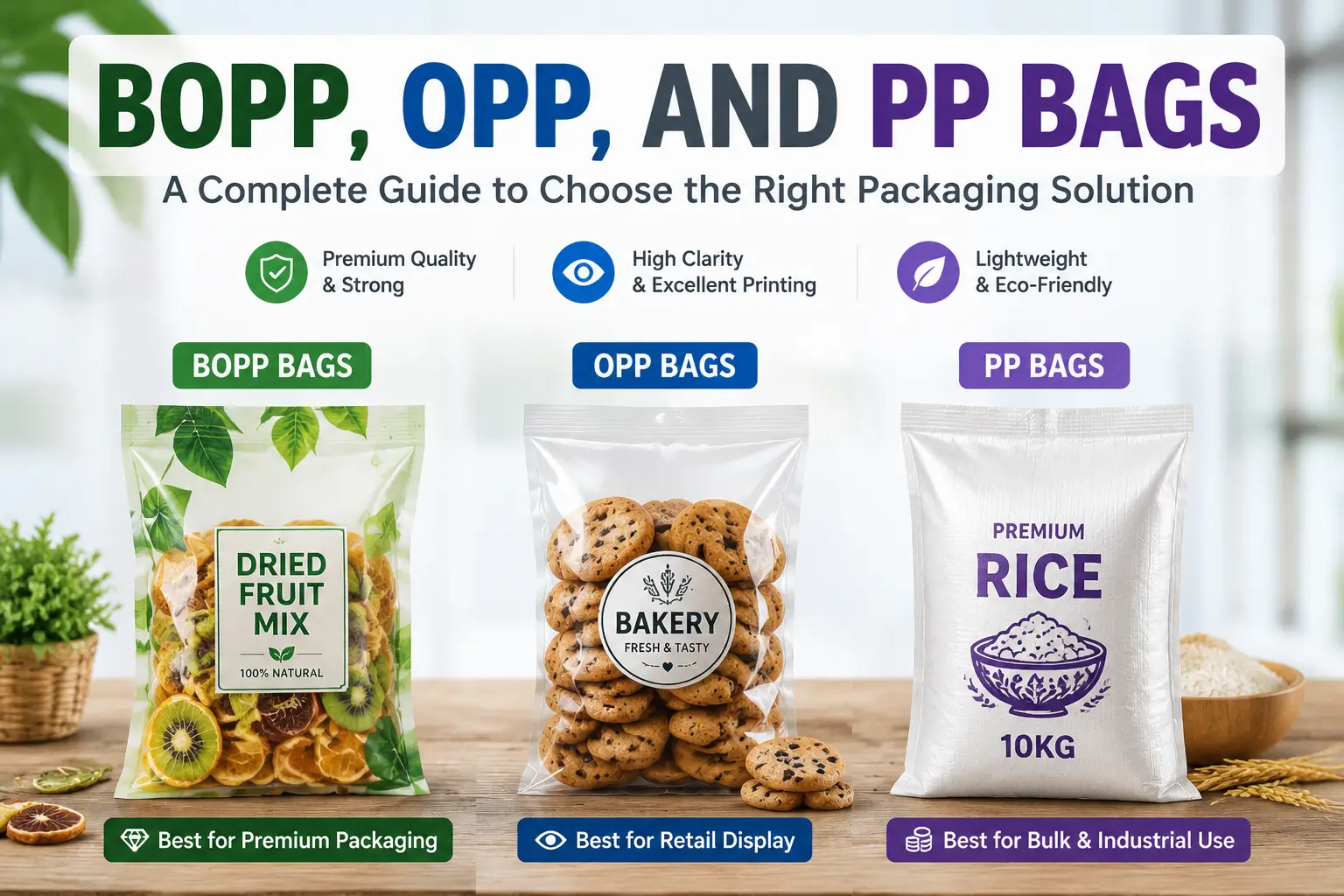
Polypropylene (PP)
Polypropylene is widely used for lightweight packaging.
Benefits:
- Good clarity
- High strength
- Suitable for heat sealing
- Good chemical resistance
Typical applications include snack packaging and small retail items.
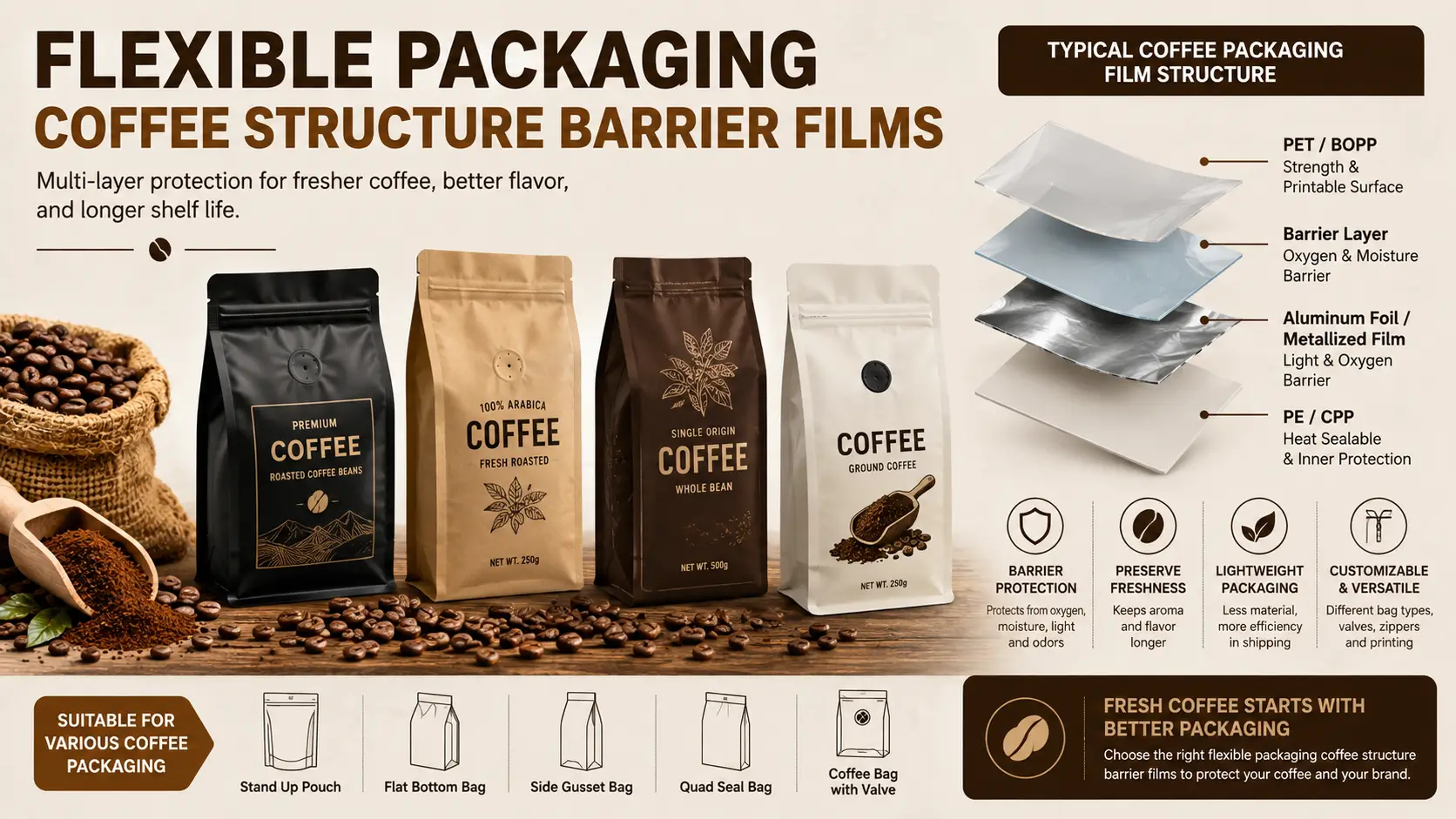
Aluminum Foil Laminates
Aluminum foil laminates provide high-barrier protection.
Common structures:
- PET / AL / PE
- PET / VMPET / PE
Key advantages:
- Excellent moisture resistance
- Strong oxygen barrier
- Light protection
- Extended shelf life
These materials are ideal for sensitive products such as powders, coffee, and pharmaceuticals.
Nylon (PA) Laminates
Nylon provides high strength and puncture resistance.
Key benefits:
- Durable structure
- Strong sealing performance
- Suitable for vacuum packaging
Widely used in meat packaging and industrial applications.
Types of Heat Sealed Bags
Heat sealed bags come in various styles designed for different packaging purposes.
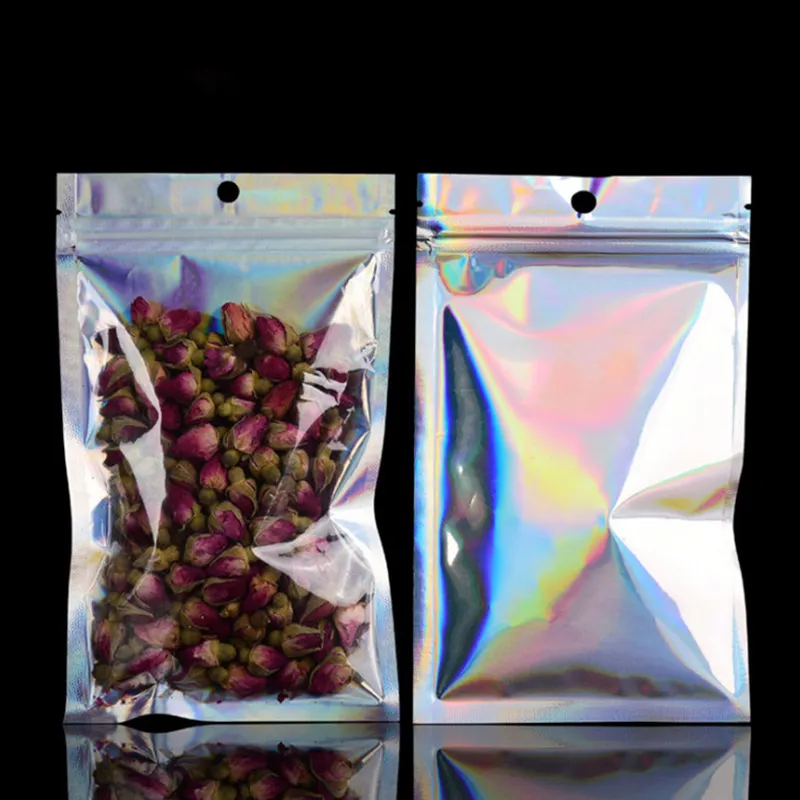
Flat Heat Sealed Bags
Flat bags are simple and economical.
Features:
- Lightweight
- Easy to stack
- Suitable for single-use packaging
Commonly used for powders, snacks, and small items.
Stand-Up Pouches
Stand-up pouches offer convenience and retail visibility.
Features:
- Self-standing design
- Strong bottom seal
- Optional zipper resealing
Used for coffee, protein powders, and dry foods.
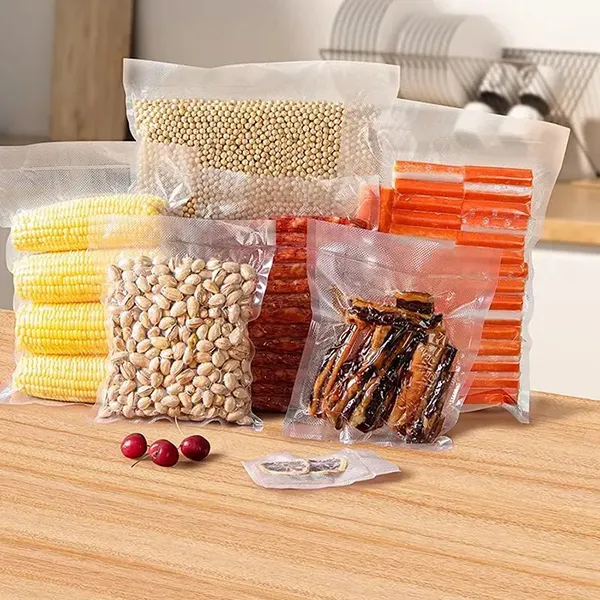
Vacuum Heat Sealed Bags
Vacuum bags remove air before sealing.
Benefits:
- Reduced oxygen exposure
- Extended shelf life
- Improved product freshness
Widely used for meat, seafood, and specialty foods.
Three-Side Seal Bags
These bags are sealed on three sides, leaving one side open for filling.
Features:
- Clean appearance
- Efficient filling
- Secure sealing
Common in food powder and pharmaceutical packaging.
Key Benefits of Heat Sealed Bags
Heat sealed bags provide several advantages that make them essential in modern packaging.
1. Strong and Secure Sealing
Heat sealing creates a durable bond that prevents:
- Leakage
- Air entry
- Product contamination
This ensures product safety throughout storage and transport.
2. Moisture and Oxygen Protection
Proper sealing reduces exposure to moisture and oxygen, helping maintain product quality.
This is particularly important for:
- Powder products
- Food items
- Medical supplies
3. Extended Shelf Life
By minimizing environmental exposure, heat sealed bags help preserve freshness and stability.
This reduces waste and improves product reliability.
4. Tamper Resistance
Heat sealed bags provide visible evidence if packaging has been opened.
This improves product safety and consumer confidence.
5. Cost-Effective Packaging Solution
Heat sealing supports automated production and efficient packaging operations.
This helps reduce packaging costs and improve productivity.
Applications of Heat Sealed Bags
Heat sealed bags are widely used across industries requiring secure packaging.
Food Packaging
Heat sealed bags are essential for:
- Snacks
- Coffee
- Food powders
- Frozen foods
- Dry ingredients
They help maintain freshness and prevent contamination.
Pharmaceutical Packaging
Medical products require secure packaging to maintain safety.
Common uses include:
- Tablets
- Powders
- Medical devices
Industrial Packaging
Heat sealed bags protect sensitive materials such as:
- Chemicals
- Industrial powders
- Hardware components
They help prevent moisture damage during storage.
Retail and Consumer Packaging
Heat sealed bags are widely used for:
- Apparel accessories
- Cosmetics
- Household items
They provide a clean and professional appearance.
How to Choose the Right Heat Sealed Bags
Selecting the correct heat sealed bag depends on several important factors.
1. Product Type
Different products require different packaging structures.
Examples:
- Powders → High-barrier laminated bags
- Dry goods → Standard heat sealed bags
2. Barrier Requirements
Sensitive products require higher barrier materials such as aluminum foil laminates.
3. Packaging Size
Consider the quantity and packaging format needed.
Options include:
- Small sachets
- Retail pouches
- Bulk packaging bags
4. Storage and Transportation Conditions
Products shipped across long distances may require stronger materials and seals.
Future Trends in Heat Sealed Packaging
Heat sealed packaging technology continues to evolve.
Key developments include:
- High-barrier flexible materials
- Automated sealing systems
- Sustainable packaging structures
- Lightweight multi-layer films
These innovations help improve packaging efficiency and environmental performance.
Conclusion
Heat sealed bags are an essential packaging solution for industries requiring secure, durable, and moisture-resistant packaging. By using heat and pressure to create airtight seals, these bags provide reliable protection against contamination, leakage, and environmental damage.
Choosing the right heat sealed bag depends on product type, barrier requirements, and storage conditions. With proper materials and sealing technology, businesses can improve product safety, extend shelf life, and enhance overall packaging efficiency.